If you’re taking a GLP-1 medication for weight management, you’ve probably heard that protein is important. But how much protein do you actually need on a GLP-1?
For many adults actively losing weight, current 2026 obesity-care guidance supports a protein intake of roughly 1.2 to 1.6 grams per kilogram of body weight per day, although the appropriate target depends on factors such as body size, muscle mass, age, kidney function, activity level, and overall health. The American Diabetes Association’s 2026 Standards of Care specifically recommends adequate protein intake and muscle-strengthening activity for people taking obesity medications.
That doesn’t mean everyone taking semaglutide, tirzepatide, or another GLP-1-related medication needs exactly the same amount of protein.
The bigger goal is to lose excess body fat while supporting muscle, strength, and adequate nutrition.
This 2026 guide explains how much protein you may need, how to calculate a practical target, which foods can make protein easier to consume when appetite is low, and what to know about protein and muscle during GLP-1-assisted weight loss.
Quick answer: A commonly recommended range during active weight loss is about 1.2–1.6 g of protein per kg of body weight per day. The 2026 ADA guidance also recommends at least 60 grams of protein per day as a general minimum during obesity-medication treatment, while noting that higher intake is often appropriate during weight reduction. Individual needs can differ, especially with kidney disease or other medical conditions.
What Are GLP-1 Medications?
GLP-1 medications are drugs that act on pathways involved in appetite, food intake, blood sugar regulation, and metabolism.
In the United States, commonly discussed medications include semaglutide and tirzepatide. Tirzepatide acts on both GIP and GLP-1 receptors, while semaglutide is a GLP-1 receptor agonist.
These medications are used as part of comprehensive treatment plans that can include nutrition changes and physical activity.
One reason eating enough protein can become challenging is that these medications can reduce appetite and calorie intake. The current U.S. prescribing information for semaglutide describes decreased calorie intake as an important effect, likely related to appetite regulation.
For someone eating substantially less than before, getting enough protein and other essential nutrients can require more planning.
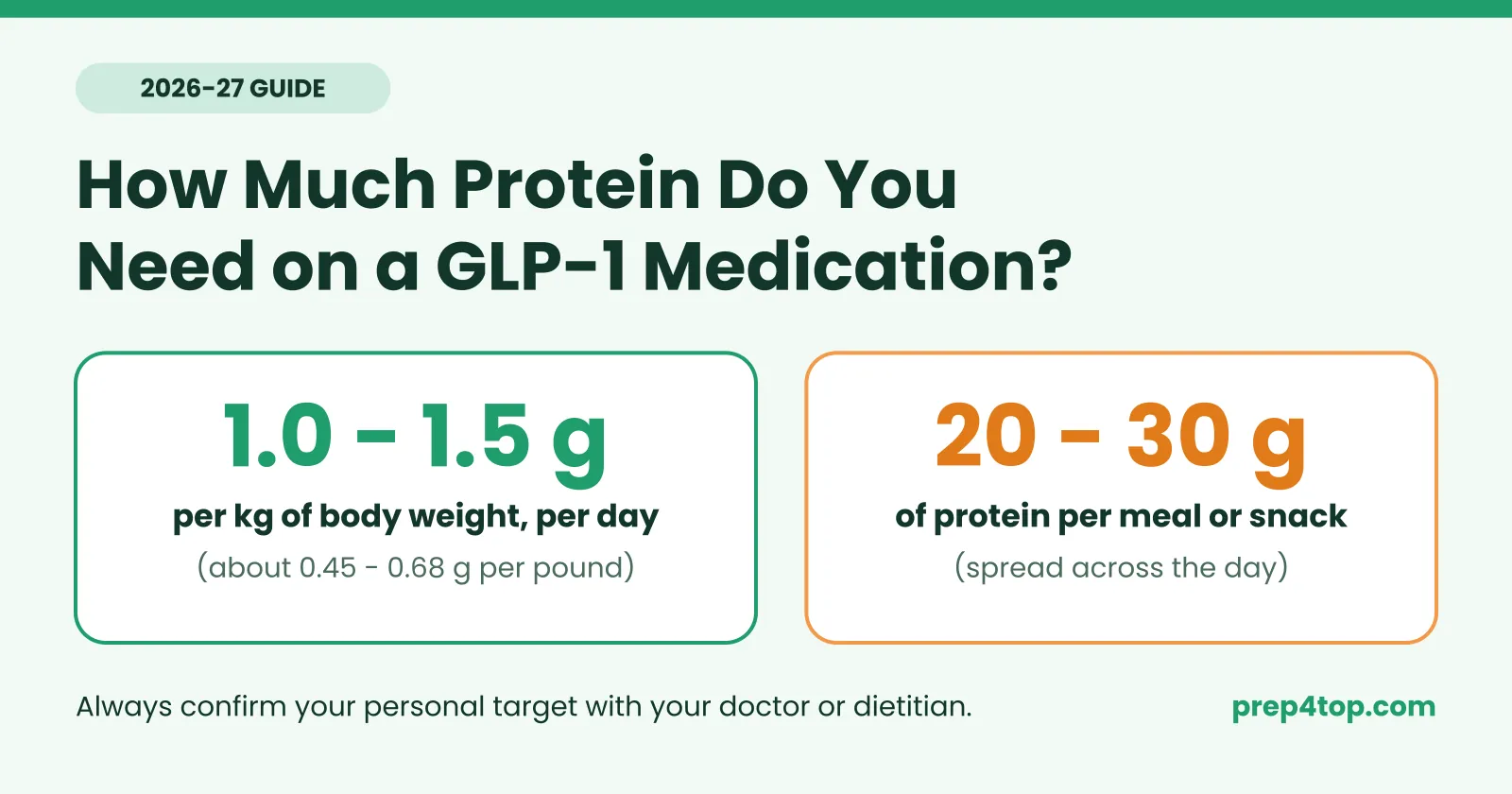
How Much Protein Should You Eat on a GLP-1?
There isn’t one protein number that applies to every person taking a GLP-1 medication.
However, 1.2–1.6 grams of protein per kilogram of body weight per day is a commonly recommended range during active weight reduction.
The ADA’s 2026 obesity standards state that a minimum of 60 grams of protein per day should be recommended during obesity-medication treatment, while noting that higher protein intake is often advised during weight reduction.
A simple example
Someone weighing 160 pounds weighs approximately 72.6 kilograms.
Using the 1.2–1.6 g/kg range:
- 72.6 × 1.2 = about 87 grams
- 72.6 × 1.6 = about 116 grams
So a 160-pound adult might discuss a daily target somewhere around 87–116 grams of protein with their healthcare professional.
This is an example, not a personal prescription.
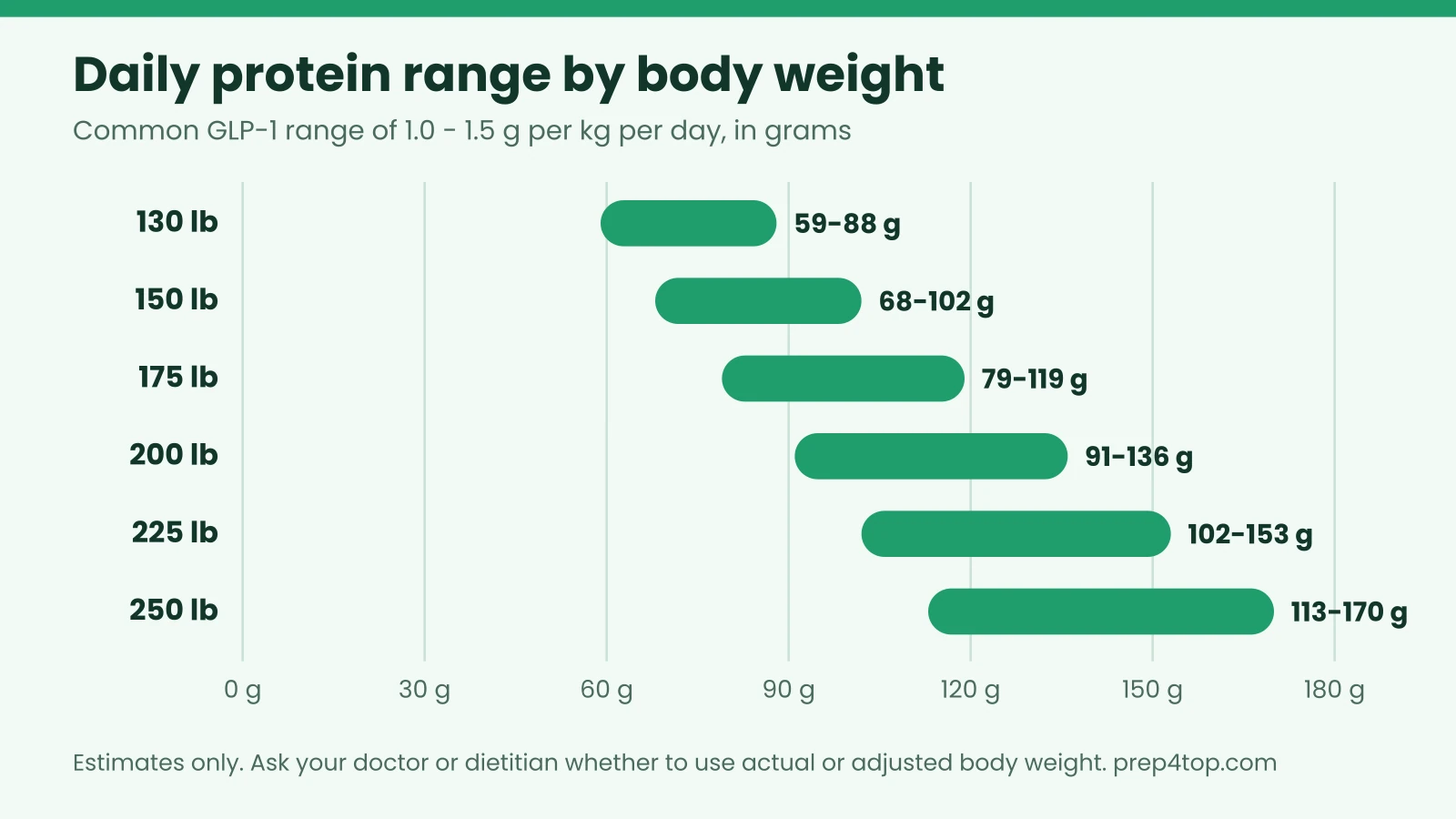
GLP-1 Protein Calculator: Examples by Body Weight
The following table illustrates what 1.2–1.6 g/kg/day looks like at different body weights.
| Body weight | Approx. weight in kg | 1.2 g/kg | 1.6 g/kg |
|---|---|---|---|
| 120 lb | 54 kg | 65 g | 87 g |
| 140 lb | 64 kg | 77 g | 102 g |
| 160 lb | 73 kg | 88 g | 117 g |
| 180 lb | 82 kg | 98 g | 131 g |
| 200 lb | 91 kg | 109 g | 146 g |
| 220 lb | 100 kg | 120 g | 160 g |
| 240 lb | 109 kg | 131 g | 174 g |
Important: Using actual body weight isn’t always the best way to determine protein needs in people with obesity. A 2025 multidisciplinary GLP-1 nutrition advisory noted that protein targets may instead be considered using adjusted body weight or fat-free mass in some individuals, although there is not yet a universal consensus on the best calculation method.
If you have obesity, kidney disease, or another medical condition, ask a registered dietitian or healthcare professional to determine the most appropriate target for you.
Why Is Protein Important During GLP-1 Weight Loss?
Protein is important because your body needs amino acids to maintain and repair tissues, including skeletal muscle.
When you lose weight, the weight coming off isn’t necessarily 100% body fat.
Weight-loss interventions can reduce both fat mass and lean body mass. The ADA’s 2026 standards report that lean body mass can account for roughly 25% of total weight lost in many weight-reduction interventions. In analyses of GLP-1 receptor agonist obesity medications, lean-mass loss has been reported at approximately 25–30% of total weight reduction.
That doesn’t mean everyone taking a GLP-1 will lose the same amount of muscle.
Age, starting body composition, calorie intake, protein intake, exercise, medication effects, and other factors can all influence changes in lean mass.
This is why successful weight management shouldn’t be measured only by the number on the scale.
Preserving strength and physical function matters too.
Does Protein Prevent Muscle Loss on a GLP-1?
Protein can support muscle maintenance, but protein alone isn’t enough.
The 2026 ADA standards specifically recommend adequate protein together with muscle-strengthening activity to help minimize muscle loss during weight reduction.
Think of it this way:
Protein provides building blocks.
Resistance training provides the stimulus.
Your body has a stronger reason to maintain muscle when that muscle is regularly being challenged.
That’s why a GLP-1 weight-management plan should ideally include both adequate protein and appropriately designed resistance exercise.
Why Eating Enough Protein Can Be Hard on a GLP-1
Knowing how much protein you need is one thing.
Actually eating it can be another.
GLP-1 medications can reduce appetite and food intake. Some people may feel satisfied after smaller portions or experience gastrointestinal symptoms that make eating difficult. The 2026 ADA standards specifically warn that appetite suppression can leave people vulnerable to inadequate nutrition.
For example, before treatment you might have been comfortable eating:
- A large breakfast
- A full lunch
- An afternoon snack
- A substantial dinner
After starting treatment, you might feel satisfied after much smaller portions.
If you’re eating significantly less overall, your protein intake can fall without you realizing it.
That’s why protein-first meal planning can be useful.
What Does “Protein First” Mean?
Protein first doesn’t mean eating only protein.
It means making a protein-rich food one of the priorities when you’re planning a meal.
For example:
Breakfast
Greek yogurt + berries + chia seeds
Lunch
Chicken + vegetables + quinoa
Snack
Cottage cheese + fruit
Dinner
Salmon + vegetables + potatoes
This approach can be especially practical for people who have limited appetite because it helps make the food they do eat more nutritionally valuable.
A 2025 joint advisory from the American College of Lifestyle Medicine, American Society for Nutrition, Obesity Medicine Association, and The Obesity Society recommends prioritizing adequate protein and notes that lower-volume protein foods can be useful when appetite is reduced.
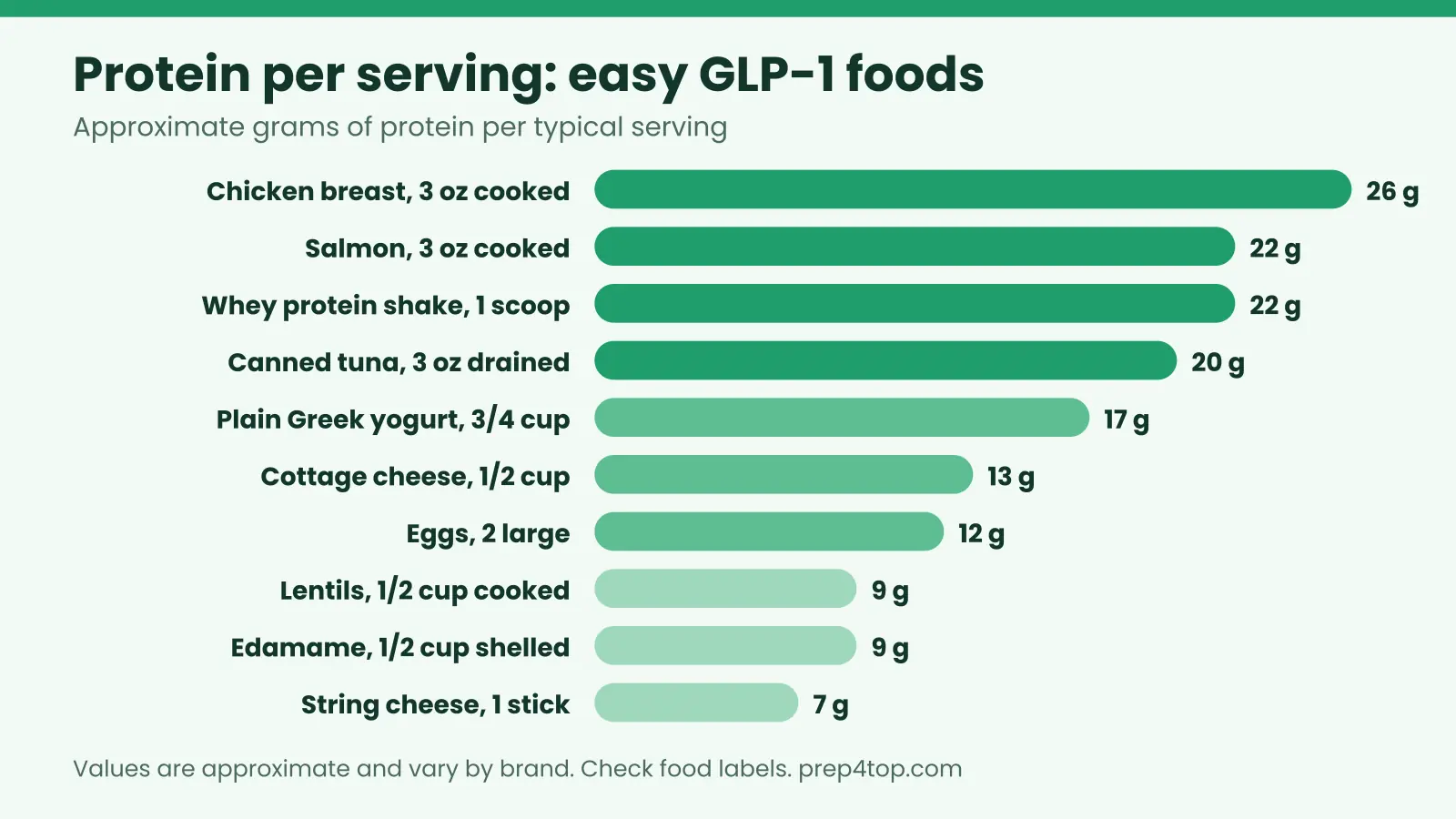
Best Protein Foods to Eat on a GLP-1
You don’t need to rely on one particular protein source.
A varied diet can include animal and plant sources.
Greek Yogurt
Greek yogurt can provide substantial protein in a relatively small serving and may be easier to eat when large meals are unappealing.
Choose options that fit your overall nutrition goals and preferences.
Eggs
Eggs are a convenient protein source that can work for breakfast, lunch, or dinner.
Try eggs with vegetables and whole-grain toast for a balanced meal.
Cottage Cheese
Cottage cheese is another relatively protein-dense option.
It can be eaten on its own or combined with fruit or vegetables.
Fish and Seafood
Fish such as salmon, tuna, cod, and other seafood can provide protein while also contributing other nutrients.
Fatty fish such as salmon also provides omega-3 fatty acids.
Chicken and Turkey
Lean poultry can provide a substantial amount of protein without requiring a huge serving.
Beans and Lentils
Plant-based proteins can contribute both protein and fiber.
Beans, lentils, peas, and chickpeas can be incorporated into soups, salads, bowls, and other meals.
Tofu and Tempeh
Tofu and tempeh can be useful options for people following vegetarian or plant-forward diets.
Nuts and Seeds
Nuts and seeds provide protein along with fats and other nutrients, although they are more calorie-dense than many lean protein foods.
The joint GLP-1 nutrition advisory encourages a variety of protein sources, including legumes, dairy, seafood, eggs, poultry, nuts, seeds, and other nutrient-dense foods.
What If You Don’t Feel Like Eating Meat?
You don’t have to eat meat to get enough protein.
Some people taking GLP-1 medications may develop food aversions or find heavier foods less appealing.
Lower-volume options may be easier to tolerate, including:
- Greek yogurt
- Eggs
- Cottage cheese
- Fish
- Tofu
- Edamame
- Lentils
- Beans
- Protein-rich smoothies
- Protein shakes when appropriate
The goal is not to force yourself to eat a particular food.
The goal is to find protein sources that fit your appetite, dietary preferences, and nutritional needs.
Can You Use Protein Shakes on a GLP-1?
Yes, a protein shake can be a practical option for some people.
It may be particularly useful when reduced appetite makes it difficult to consume enough protein from regular meals.
For example, a smaller protein shake may be easier to consume than a large meal.
However, you don’t automatically need a protein supplement just because you’re taking a GLP-1.
Whole foods should remain an important part of your diet whenever you can comfortably tolerate them.
A shake is best viewed as a convenient nutritional tool, not a replacement for a balanced eating pattern.
The joint GLP-1 nutrition advisory specifically notes that protein shakes, bars, and fortified foods may help some people meet protein targets when food intake is limited.
How Much Protein Should You Eat at Each Meal?
There’s no single meal-by-meal formula that everyone must follow.
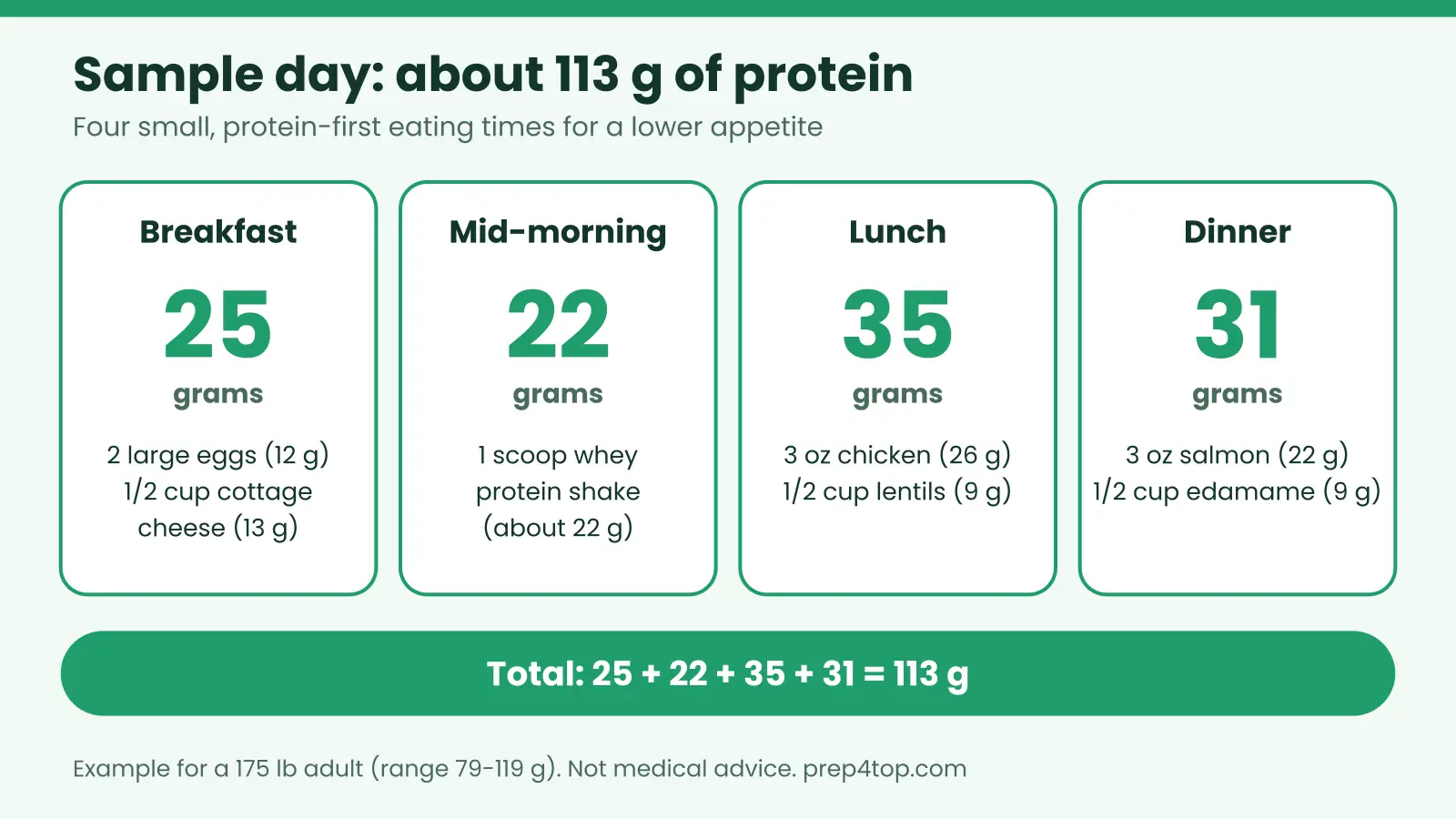
But spreading protein throughout the day can make a daily target easier to reach.
For example, someone with a 100-gram daily target might aim for approximately:
- Breakfast: 25 g
- Lunch: 30 g
- Snack: 15 g
- Dinner: 30 g
This isn’t a medical requirement.
It’s simply a practical way to avoid reaching bedtime and realizing that you’ve consumed very little protein.
For someone with a small appetite, several smaller eating occasions may also feel more manageable than two very large meals.
What Is the Difference Between 0.8 g/kg and 1.2–1.6 g/kg?
You may have seen 0.8 grams of protein per kilogram of body weight per day described as the adult Recommended Dietary Allowance.
So why are higher numbers being discussed for people losing weight?
The distinction is important.
The 0.8 g/kg figure is the general adult RDA.
Higher protein targets, including 1.2–1.6 g/kg/day, have been proposed during active weight reduction and are reflected in current obesity-care guidance.
In other words:
The minimum amount needed to meet a general population reference is not necessarily the same as the amount that may be useful during intentional weight loss.
Your individual target still needs to account for your health and body composition.
What About Fiber on a GLP-1?
Protein tends to get the most attention, but fiber is also important.
Beans, lentils, vegetables, fruits, whole grains, nuts, and seeds can contribute fiber and other nutrients.
However, people experiencing gastrointestinal symptoms may need to adjust food choices and fiber intake according to tolerance.
The 2025 multidisciplinary GLP-1 nutrition advisory recommends emphasizing nutrient-dense foods such as fruits, vegetables, whole grains, legumes, lean proteins, nuts, and seeds.
If constipation, diarrhea, nausea, vomiting, or significant abdominal symptoms are persistent or severe, talk with your healthcare professional rather than trying to solve the problem through diet alone.
How Much Water Should You Drink on a GLP-1?
Hydration is another part of GLP-1 nutrition.
The 2026 ADA obesity standards cite general daily water intake of approximately 3.7 liters for men and 2.7 liters for women from all sources, while emphasizing that individual needs should be modified for certain conditions such as chronic kidney disease or heart failure.
These figures include water from beverages and food, so they should not automatically be interpreted as the amount of plain water everyone needs to drink.
Your fluid requirements can vary depending on body size, activity, climate, diet, health conditions, and medications.
Should You Exercise While Taking a GLP-1?
For most people who can safely exercise, physical activity is an important part of comprehensive weight management.
But for muscle preservation specifically, resistance training deserves special attention.
The ADA’s 2026 obesity standards recommend muscle-strengthening activities alongside adequate protein during weight reduction.
This could include appropriately prescribed:
- Bodyweight exercises
- Resistance bands
- Weight machines
- Dumbbells
- Free weights
- Other resistance exercises
If you’re new to exercise, have significant health conditions, or have been inactive for a long time, ask your healthcare professional about an appropriate starting program.
A Simple High-Protein GLP-1 Meal Plan
Here’s an example of how protein can be incorporated into a day without turning every meal into a giant serving.
Breakfast
Greek yogurt with berries, chia seeds, and a small serving of nuts.
Lunch
Grilled chicken or tofu bowl with vegetables, beans, and quinoa.
Snack
Cottage cheese with berries or fruit.
Dinner
Baked salmon with roasted vegetables and potatoes.
Optional protein supplement
If your individualized protein target isn’t being met, a small protein shake may be considered.
The exact portions should depend on your calorie requirements, appetite, dietary preferences, and medical needs.
What Should You Eat If You Have Almost No Appetite?
If your appetite is very low, eating a huge meal may be unrealistic.
Instead, focus on nutrient density.
Some people may find smaller meals and snacks easier to tolerate than three large meals.
Potential options include:
- Greek yogurt
- Eggs
- Cottage cheese
- Smoothies
- Protein drinks
- Fish
- Tofu
- Soft cooked vegetables
- Soups containing beans or lean protein
The 2025 GLP-1 nutrition advisory notes that small, frequent meals can be useful when hunger and food interest are low.
If you are consistently unable to eat or drink enough, don’t simply increase protein supplements on your own. Contact your healthcare professional.
What About Kidney Disease and Protein?
This is an important exception.
A higher-protein target that may be reasonable for one person could be inappropriate for someone with certain kidney conditions.
The 2026 ADA standards specifically state that protein recommendations should be modified for people with conditions such as chronic kidney disease.
If you have kidney disease or have been told to limit protein, don’t use the 1.2–1.6 g/kg range without individualized medical advice.
A registered dietitian can help determine an appropriate target.
Does the Type of GLP-1 Medication Change Your Protein Needs?
Not necessarily.
Protein needs are determined more by your individual nutritional situation than by simply whether you’re taking semaglutide, tirzepatide, or another medication.
However, different medications and doses can affect appetite, gastrointestinal symptoms, food intake, and weight loss differently.
The U.S. prescribing information for semaglutide and tirzepatide describes reductions in calorie intake associated with appetite-related effects.
That’s why nutrition should be individualized rather than based solely on the name of the medication.
Semaglutide and Protein
Semaglutide medications can reduce calorie intake, making it easier for some people to unintentionally consume too little food.
If you’re using semaglutide and your appetite has dropped substantially, make protein-rich, nutrient-dense foods a priority.
Rather than asking:
“How little can I eat?”
A more useful question is:
“How can I make the food I do eat as nutritious as possible?”
The current Wegovy prescribing information also emphasizes use alongside a reduced-calorie diet and increased physical activity.
Tirzepatide and Protein
Tirzepatide acts on both GIP and GLP-1 receptors and reduces calorie intake through appetite-related effects.
As with other appetite-suppressing obesity medications, reduced food intake can make nutritional adequacy more challenging for some people.
The same basic principles apply:
Prioritize protein.
Choose nutrient-dense foods.
Include resistance training when medically appropriate.
Monitor your overall nutritional intake.
Signs You May Not Be Eating Enough
Everyone’s situation is different, but talk with your healthcare professional if you’re experiencing concerns such as:
- Consistently eating very little
- Difficulty meeting your protein target
- Significant weakness
- Declining strength
- Persistent nausea or vomiting
- Ongoing diarrhea
- Difficulty maintaining hydration
- Very rapid or excessive weight loss
- Symptoms of nutritional deficiency
Your clinician may recommend dietary changes, medication adjustments, laboratory testing, or referral to a registered dietitian depending on the situation.
The ADA recommends regular monitoring of nutritional intake during obesity-medication treatment.
The Biggest Mistake: Focusing Only on the Scale
A lower number on the scale can be encouraging.
But weight isn’t the only outcome that matters.
A comprehensive approach should also consider:
- Body composition
- Muscle strength
- Physical function
- Nutrition
- Fitness
- Metabolic health
- Quality of life
The 2026 ADA standards specifically recommend attention to muscle strength and function in people undergoing substantial weight reduction.
That’s a major reason protein and resistance exercise have become increasingly important parts of the GLP-1 conversation.
The 2026 Takeaway: Protein + Resistance Training + Nutrient Density
The latest guidance doesn’t suggest that people taking GLP-1 medications should simply eat as much protein as possible.
Instead, the emerging approach is more balanced:
1. Get enough protein
A commonly used range during active weight loss is around 1.2–1.6 g/kg/day, individualized to the person.
2. Strength train
Resistance exercise provides an important stimulus for maintaining muscle.
3. Eat nutrient-dense foods
Protein should exist alongside vegetables, fruits, whole grains, legumes, healthy fats, and other nutrient-rich foods.
4. Stay hydrated
Fluid requirements should be individualized, especially when medical conditions affect fluid needs.
5. Monitor nutritional adequacy
Reduced appetite can make it surprisingly easy to fall short on protein, calories, vitamins, minerals, and fluids.
Frequently Asked Questions About Protein and GLP-1 Medications
How much protein do you need on a GLP-1?
A commonly used target during active weight loss is approximately 1.2–1.6 g/kg/day, but individual needs vary.
What is the best protein for GLP-1 users?
There is no single best protein. Greek yogurt, eggs, fish, poultry, cottage cheese, beans, lentils, tofu, and other nutrient-dense protein foods can all fit into a GLP-1 eating plan.
Does protein prevent muscle loss on GLP-1 medications?
Adequate protein supports muscle maintenance, but resistance training should be combined with protein intake to better support lean mass.
Can GLP-1 medications make it difficult to eat enough protein?
Yes. Appetite suppression and smaller portions can make it harder for some people to consume adequate protein and other nutrients.
Is a protein shake necessary on semaglutide or tirzepatide?
No. A protein shake is optional and may be useful when food intake is insufficient or solid foods are difficult to tolerate.
Medical Disclaimer
This article is for educational purposes only and is not a substitute for individualized medical advice, diagnosis, or treatment. Protein requirements vary by person and may need to be modified for kidney disease, heart failure, pregnancy, older age, athletic training, or other medical conditions. Do not change your prescription medication or treatment plan based solely on this article. Speak with your healthcare professional for personalized guidance.
Sources and U.S. References
- American Diabetes Association — Standards of Care in Overweight and Obesity, 2026. The 2026 guidance addresses nutrition during obesity-medication treatment, protein intake, muscle-strengthening activity, hydration, and nutritional monitoring.
- Joint GLP-1 Nutrition Advisory — American College of Lifestyle Medicine, American Society for Nutrition, Obesity Medicine Association, and The Obesity Society. The advisory addresses protein intake, nutrient density, small meals, protein-rich foods, and resistance training during GLP-1 therapy.
- U.S. Prescribing Information for Wegovy (semaglutide). The current prescribing information describes semaglutide’s effects on appetite and calorie intake and its use alongside a reduced-calorie diet and increased physical activity.
- U.S. FDA Prescribing Information for Zepbound (tirzepatide). The prescribing information describes tirzepatide as a GIP/GLP-1 receptor agonist and its effects on calorie intake and appetite.