Starting a GLP-1 medication can change the way you think about food.
You may feel full after a much smaller meal. Foods you used to enjoy may suddenly seem too heavy. You may experience nausea, constipation, reflux, or other digestive changes. And because you’re eating less overall, it can become surprisingly easy to fall short on protein, fiber, fluids, vitamins, and minerals.
So what should you actually eat during your first month on a GLP-1?
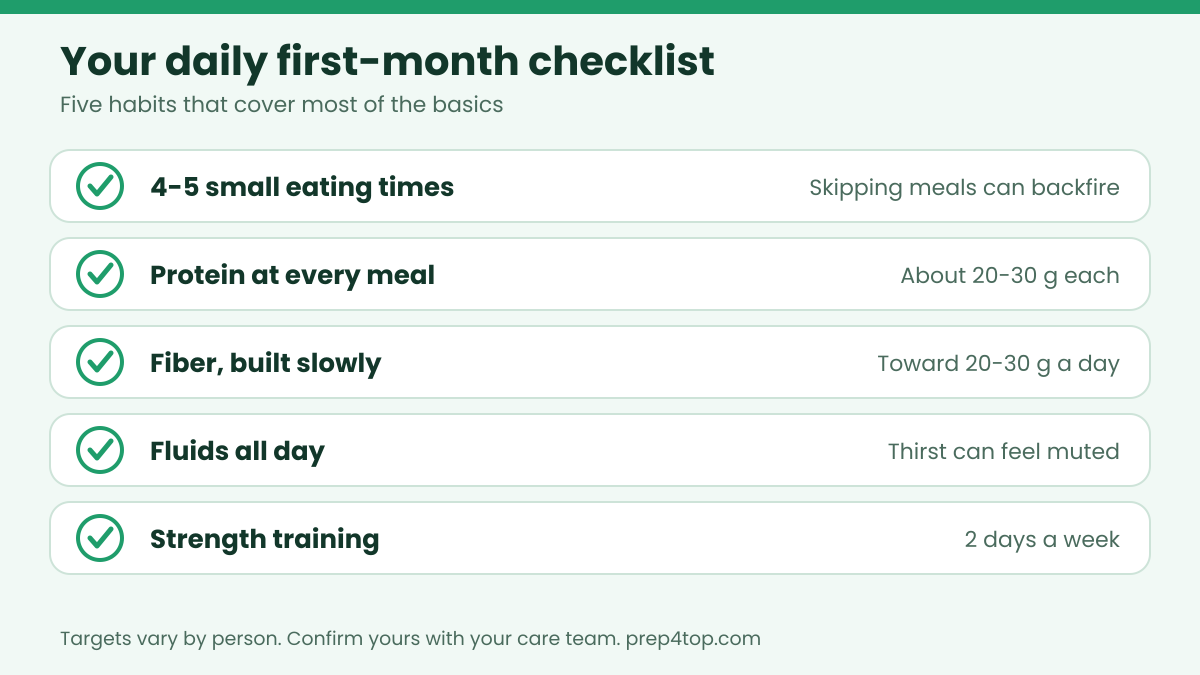
The best approach isn’t an extreme diet or a list of “forbidden” foods. Instead, focus on small, nutrient-dense meals, adequate protein, vegetables and fruit, fiber-rich foods as tolerated, healthy fats, whole-food carbohydrates, and sufficient fluids.
Current guidance from the American Diabetes Association and a 2025 joint advisory from major U.S. nutrition and obesity organizations emphasizes nutrient-dense foods, adequate protein, hydration, smaller meals, and strategies to manage gastrointestinal side effects during GLP-1 treatment.
This guide explains what to eat during your first four weeks, what foods may be easier to tolerate, what to limit, and how to build a simple GLP-1 meal routine that can continue beyond your first month.

Quick answer: During your first month on a GLP-1, prioritize small meals containing protein, vegetables or fruit, nutrient-rich carbohydrates, and healthy fats. Eat slowly, stop when comfortably full, stay hydrated, and adjust food choices according to your symptoms and tolerance.
What Happens to Your Appetite During the First Month?
One of the biggest changes people notice after starting a GLP-1 medication is that they may simply want less food.
GLP-1-based medications can reduce appetite and calorie intake. This can be useful for weight management, but it also creates a nutritional challenge: eating less food means you need to be more intentional about the nutritional quality of what you do eat.
The ADA’s current obesity guidance notes that appetite suppression can make people vulnerable to inadequate nutrition, including insufficient protein and micronutrients.
You might notice that:
- You get full faster.
- Large meals become uncomfortable.
- You don’t think about food as often.
- Certain foods become less appealing.
- You experience nausea after eating.
- You have less interest in high-fat or heavily seasoned foods.
- You naturally start eating smaller portions.
These changes aren’t necessarily a problem.
The goal is to work with your reduced appetite rather than trying to eat the same portions you ate before starting treatment.
The Most Important Rule: Don’t Force Large Meals
One of the simplest changes you can make during your first month is to stop thinking that every meal needs to be large.
If you’re comfortably full, continuing to eat just to clean your plate can make nausea, reflux, bloating, or discomfort worse.
The 2026 ADA Standards of Care specifically recommend smaller meals and mindful eating practices, including stopping when you feel full, for people experiencing gastrointestinal effects from obesity medications.
Instead of:
“I need to finish this meal.”
Try:
“I need to give my body enough nutrition without eating past comfortable fullness.”
That small mindset shift can make the first month much easier.
What Should You Eat During Your First Month on a GLP-1?
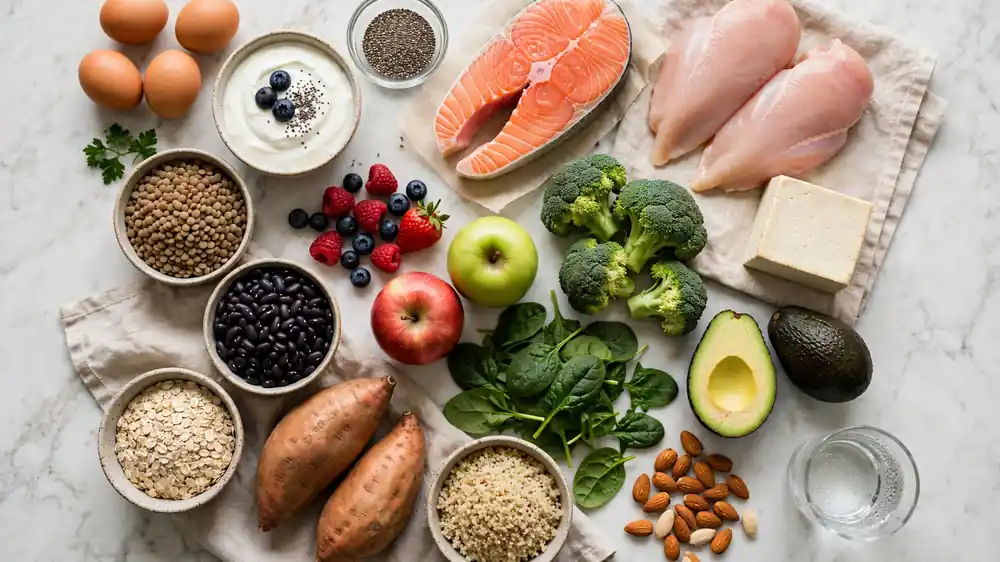
A simple GLP-1 plate can contain four main components:
1. Protein
Examples:
- Eggs
- Greek yogurt
- Cottage cheese
- Chicken
- Turkey
- Fish
- Seafood
- Tofu
- Tempeh
- Beans
- Lentils
- Edamame
2. Vegetables and Fruit
Examples:
- Berries
- Apples
- Bananas
- Oranges
- Leafy greens
- Carrots
- Tomatoes
- Broccoli
- Peppers
- Squash
3. Nutrient-Rich Carbohydrates
Examples:
- Oatmeal
- Potatoes
- Sweet potatoes
- Brown rice
- Quinoa
- Beans
- Whole-grain bread
- Whole-grain pasta
4. Healthy Fats
Examples:
- Avocado
- Nuts
- Seeds
- Olive oil
- Nut butter
The 2025 joint advisory from the American College of Lifestyle Medicine, American Society for Nutrition, Obesity Medicine Association, and The Obesity Society recommends emphasizing nutrient-dense foods such as fruits, vegetables, whole grains, legumes, lean proteins, nuts, seeds, and dairy during GLP-1 treatment.
Protein Should Be a Priority
Protein deserves special attention during GLP-1-assisted weight loss.
When you’re eating substantially fewer calories, getting enough protein can become difficult.
Protein provides amino acids needed to maintain and repair body tissues, including skeletal muscle.
The 2026 ADA obesity standards recommend at least 60 grams of protein per day during obesity-medication treatment, while noting that higher protein intake is often appropriate during active weight reduction, with 1.2–1.6 g/kg/day cited as a higher target range.
However, there isn’t one protein target that’s appropriate for everyone.
People with kidney disease or other medical conditions may need individualized recommendations.
Easy protein choices for your first month
If your appetite is small, prioritize relatively nutrient-dense options such as:
- Greek yogurt
- Eggs
- Cottage cheese
- Fish
- Chicken
- Tofu
- Edamame
- Lentils
- Beans
- Protein-rich smoothies
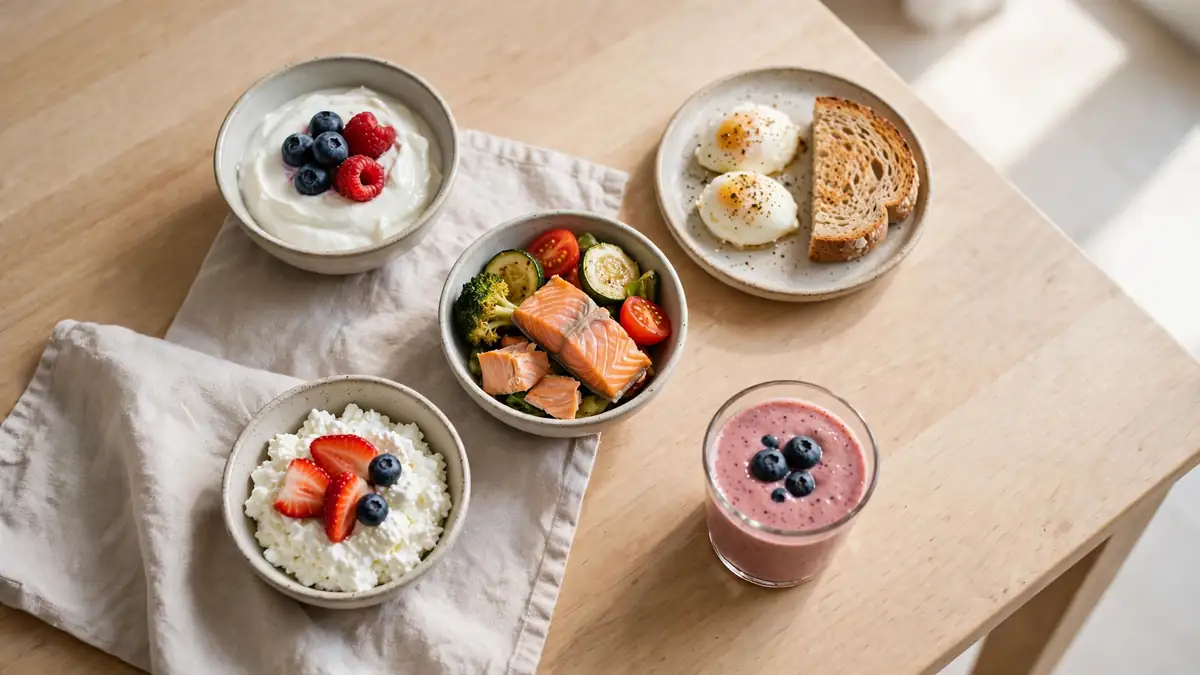
The joint GLP-1 advisory specifically suggests lower-volume protein foods such as fish, eggs, Greek yogurt, cottage cheese, nuts, and seeds when appetite is reduced.
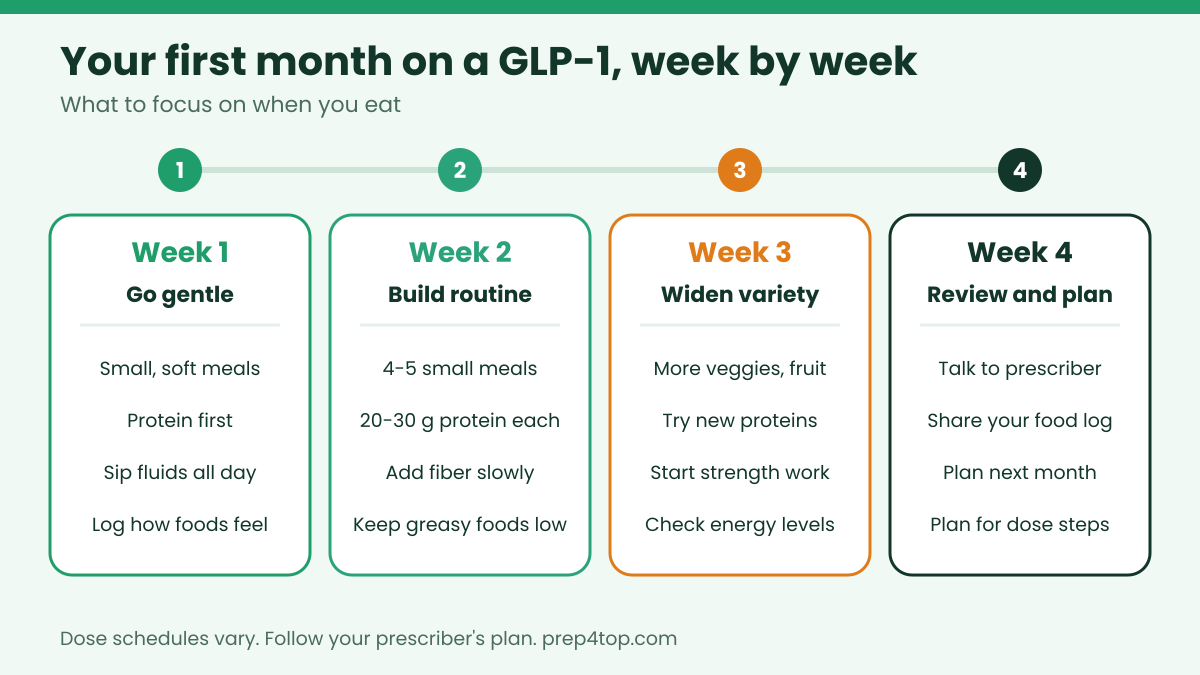
Week 1: Keep Meals Simple
Your first week doesn’t need to be complicated.
The priority is learning how your body responds to the medication.
You may not know yet which foods feel comfortable and which ones trigger nausea or fullness.
Start with relatively simple meals.
Breakfast
Try:
Greek yogurt + berries + a small amount of chia seeds
or
Two eggs + whole-grain toast + fruit
If a full breakfast feels too heavy, eat a smaller portion.
Lunch
Try:
Chicken + cooked vegetables + a small serving of rice
or
Turkey and avocado whole-grain wrap
Snack
Try:
Cottage cheese + fruit
or
Greek yogurt
Dinner
Try:
Baked salmon + potatoes + cooked vegetables
The goal during Week 1 isn’t perfection.
It’s finding meals that are nutritious, comfortable, and sustainable.
Week 2: Build a Consistent Eating Pattern
By the second week, you may have a better idea of your appetite and food tolerance.
This is a good time to create a simple routine.
Instead of waiting until you’re extremely hungry, consider eating smaller meals at fairly consistent times.
The joint GLP-1 nutrition advisory recommends regular, small meals and discourages long periods without eating followed by very large meals.
A simple schedule might look like:
Breakfast: 8 a.m.
Lunch: 12 p.m.
Snack: 3–4 p.m.
Dinner: 6–7 p.m.
Your schedule doesn’t have to look exactly like this.
The important part is finding a routine that works with your appetite and lifestyle.
Week 3: Add More Variety
Once you’ve identified foods you tolerate well, gradually expand your options.
You don’t want your entire diet to become chicken, protein shakes, and yogurt.
Your body needs a wide range of nutrients.
Add different:
- Vegetables
- Fruits
- Whole grains
- Beans
- Lentils
- Fish
- Nuts
- Seeds
- Dairy or suitable alternatives
Variety also makes your diet easier to maintain over the long term.
Week 4: Build Your Long-Term GLP-1 Eating Pattern
By Week 4, you should start thinking beyond the “first month.”
The medication may be part of your long-term weight-management strategy, so your diet needs to be something you can realistically continue.
Rather than following a temporary crash diet, build a repeatable structure:
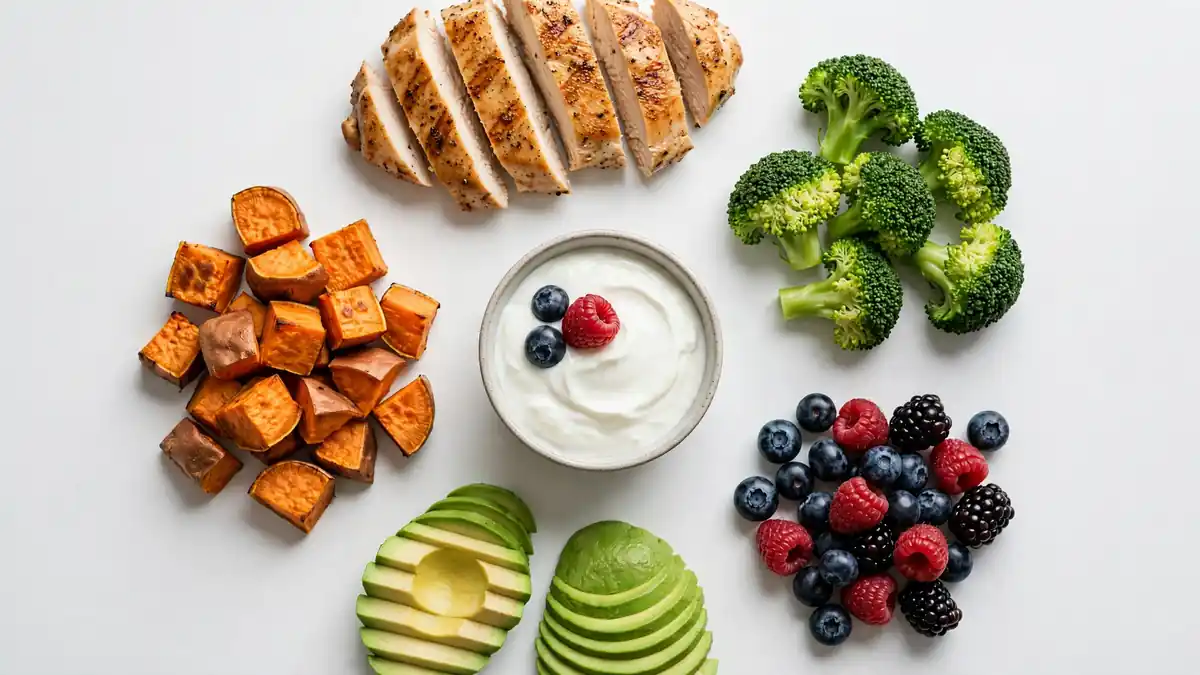
Protein + produce + nutrient-rich carbohydrate + healthy fat
For example:
Salmon + broccoli + potatoes + olive oil
or:
Chicken + vegetables + brown rice + avocado
or:
Tofu + mixed vegetables + quinoa + sesame seeds
You can adjust the portions according to your appetite and nutritional needs.
Best Breakfast Foods During Your First Month
Breakfast doesn’t have to be large.
If you wake up without much appetite, choose something relatively small but nutritious.
Option 1: Greek Yogurt Bowl
- Greek yogurt
- Berries
- Chia seeds
- Small amount of nuts
Option 2: Eggs and Toast
- Eggs
- Whole-grain toast
- Fruit
Option 3: Protein Smoothie
- Unsweetened milk or yogurt
- Berries
- Banana
- Protein source
- Optional spinach
Option 4: Oatmeal
- Oats
- Milk
- Berries
- Chia or flax seeds
- Optional Greek yogurt
The goal isn’t to force yourself to eat a huge breakfast.
Best Lunch Foods on a GLP-1
Lunch can be simple.
Chicken Bowl
Chicken + vegetables + quinoa
Salmon Bowl
Salmon + rice + cooked vegetables
Turkey Wrap
Turkey + avocado + vegetables + whole-grain wrap
Lentil Bowl
Lentils + vegetables + brown rice
Tofu Bowl
Tofu + vegetables + quinoa
If large meals make you uncomfortable, start with a smaller portion and save the remainder rather than forcing yourself to finish.
Best Dinner Foods on a GLP-1
Dinner is often where people accidentally eat too much.
A heavy meal late at night can be particularly uncomfortable for someone experiencing reflux, nausea, or delayed stomach emptying.
Try meals such as:
- Baked fish + vegetables + potatoes
- Chicken + rice + cooked vegetables
- Tofu + vegetables + quinoa
- Turkey + sweet potato + vegetables
- Lentil soup + whole-grain toast
Eat slowly and stop when comfortably full.
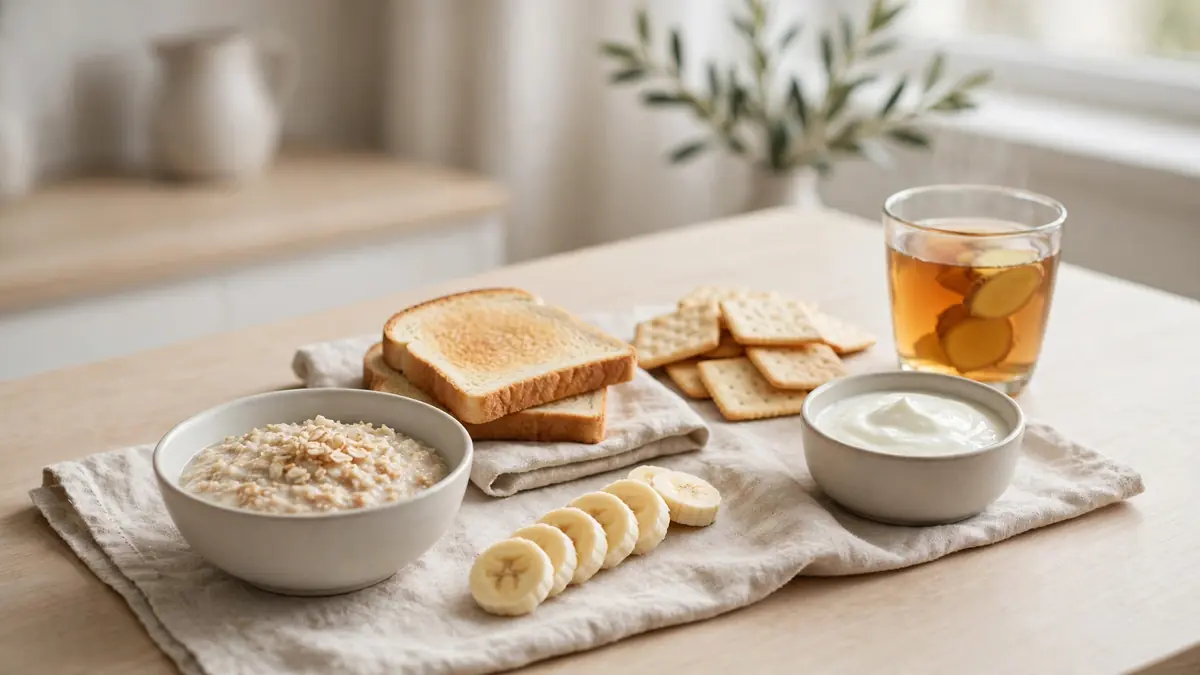
What to Eat When You Feel Nauseous
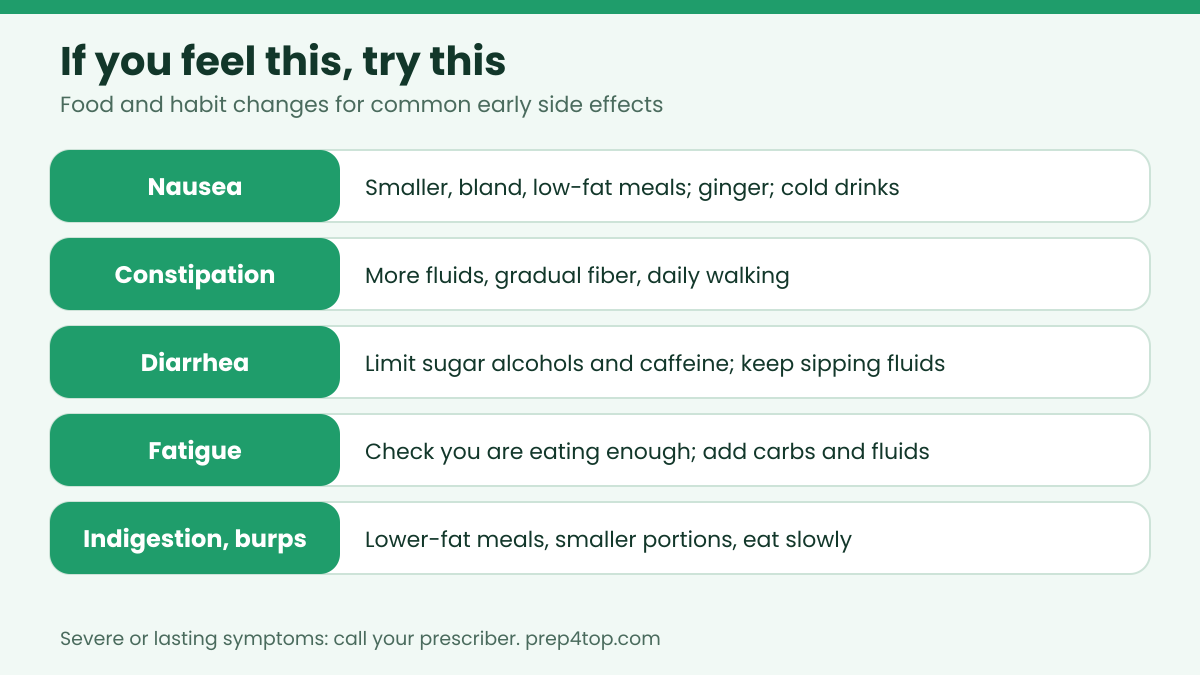
Nausea can be one of the most frustrating parts of starting GLP-1 therapy.
When you’re nauseated, the goal isn’t to force yourself to eat a normal-sized meal.
Instead, smaller and simpler meals may be easier to tolerate.
Potential options include:
- Crackers
- Toast
- Applesauce
- Bananas
- Rice
- Oatmeal
- Plain potatoes
- Greek yogurt if tolerated
- Eggs if tolerated
- Light soups
- Small smoothies
The 2026 ADA guidance recommends reducing meal size and decreasing high-fat or spicy foods when gastrointestinal symptoms occur.
The joint GLP-1 nutrition advisory also supports small meals and nutrient-dense smoothies or protein drinks when appetite is low.
If nausea or vomiting is persistent or severe, contact your healthcare professional rather than trying to manage it solely through food.
What to Eat If You Have Constipation
Constipation can occur during GLP-1-based treatment.
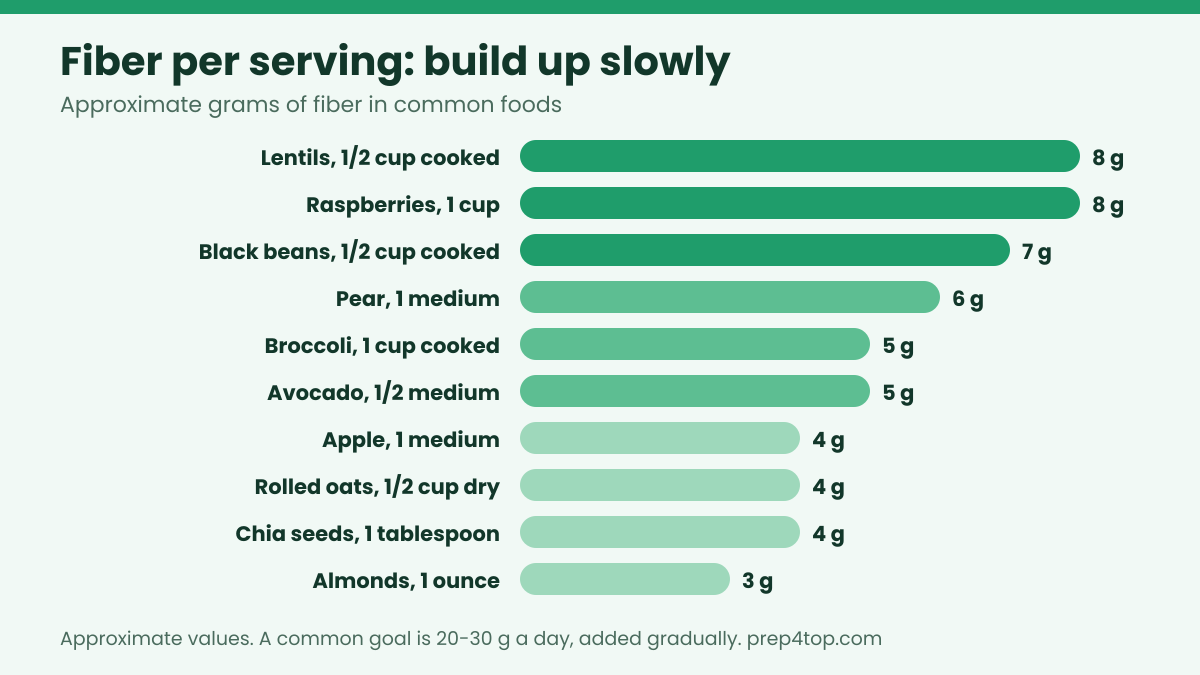
Reduced food intake can also mean less fiber overall.
Depending on your tolerance, gradually include foods such as:
- Oatmeal
- Berries
- Apples
- Pears
- Beans
- Lentils
- Vegetables
- Chia seeds
- Flax seeds
- Whole grains
And don’t forget fluids.
Increasing fiber very quickly without enough fluid can sometimes make digestive discomfort worse.
A 2025 expert consensus recommends gradually increasing fiber while maintaining adequate hydration to help manage constipation and digestive symptoms during GLP-1-based therapy.
How Much Water Should You Drink on a GLP-1?
Hydration is especially important when you’re eating less.
The 2026 ADA obesity guidance cites general daily water intake of approximately 3.7 liters for men and 2.7 liters for women from all sources, but emphasizes that these amounts need to be modified for certain health conditions.
Remember that these figures include water from food and beverages; they aren’t necessarily the amount of plain water you need to drink.
A practical habit is to keep water nearby and drink regularly throughout the day.
If vomiting or diarrhea occurs, dehydration can become a greater concern.
Should You Drink Protein Shakes?
You don’t automatically need a protein shake just because you’re taking a GLP-1.
However, they can be useful if your appetite is so low that you’re struggling to meet your protein needs.
For example:
Greek yogurt + berries + milk + protein powder
can provide a relatively small-volume meal or snack with protein and other nutrients.
The joint GLP-1 advisory recognizes protein shakes, bars, and fortified products as potential tools for people who have difficulty meeting protein requirements through food alone.
Use them as a tool—not as the foundation of your entire diet.
What Foods Should You Limit During the First Month?
You don’t necessarily need a strict list of forbidden foods.
But some foods may be harder to tolerate, particularly during dose initiation or escalation.
The 2026 ADA guidance recommends decreasing intake of high-fat and spicy foods when gastrointestinal symptoms occur.
You may want to limit:
Very Large Meals
Large portions can be difficult to tolerate when appetite and stomach emptying have changed.
Very Fatty Meals
Examples include:
- Fried foods
- Heavy cream-based dishes
- Large portions of fatty meats
- Greasy fast food
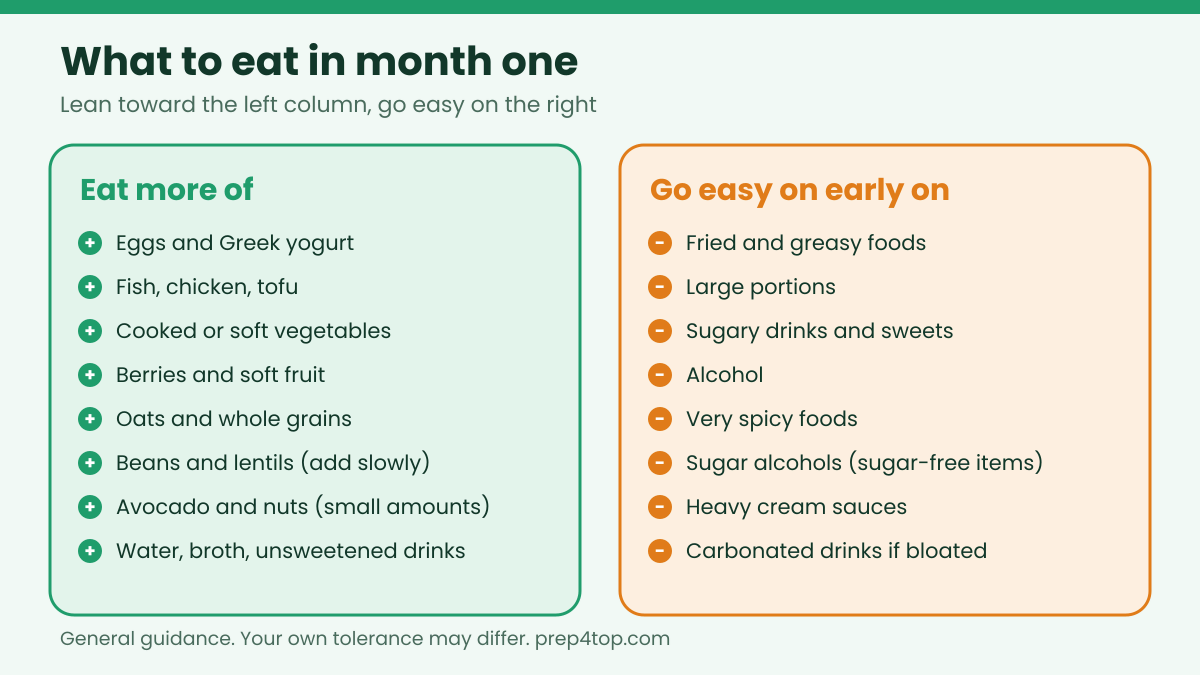
Very Spicy Foods
If spicy foods trigger reflux or nausea, temporarily choose milder options.
Sugary Drinks
Soda, sweet tea, energy drinks, and other sugar-sweetened beverages can add calories without providing much nutritional value.
Highly Processed Snack Foods
Chips, cookies, candy, and similar foods can take up valuable room in a smaller calorie budget without providing much protein or micronutrient density.
Excess Alcohol
Alcohol can worsen some gastrointestinal symptoms and may not fit well with your overall treatment plan.
Do You Have to Stop Eating Carbs on a GLP-1?
No.
Carbohydrates don’t automatically prevent weight loss.
The focus should be on the quality and quantity of carbohydrates rather than eliminating them.
Better options can include:
- Oats
- Potatoes
- Sweet potatoes
- Beans
- Lentils
- Quinoa
- Brown rice
- Whole-grain bread
- Whole-grain pasta
- Fruits
Whole-food carbohydrate sources can provide fiber and other nutrients.
Do You Have to Avoid Fat?
No.
Healthy fats can be part of a balanced GLP-1 eating pattern.
Examples include:
- Avocado
- Olive oil
- Nuts
- Seeds
- Nut butter
- Fatty fish
The issue is that very high-fat meals can be difficult for some people to tolerate, particularly when nausea or digestive symptoms are present.
So there’s an important distinction:
Healthy fats can be part of your diet.
Very large, greasy meals may be harder to tolerate.
A 7-Day Beginner GLP-1 Meal Plan
Here’s a simple example—not a personalized medical diet.
Day 1
Breakfast: Greek yogurt + berries
Lunch: Grilled chicken + rice + vegetables
Snack: Apple + peanut butter
Dinner: Baked salmon + potatoes + broccoli
Day 2
Breakfast: Eggs + whole-grain toast + fruit
Lunch: Turkey and avocado wrap
Snack: Cottage cheese + berries
Dinner: Chicken + quinoa + cooked vegetables
Day 3
Breakfast: Oatmeal + Greek yogurt + berries
Lunch: Lentil bowl + vegetables
Snack: Banana + small handful of nuts
Dinner: Baked fish + sweet potato + vegetables
Day 4
Breakfast: Greek yogurt + banana + chia seeds
Lunch: Chicken and quinoa bowl
Snack: Cottage cheese + fruit
Dinner: Tofu + rice + vegetables
Day 5
Breakfast: Eggs + avocado toast
Lunch: Salmon bowl + vegetables
Snack: Greek yogurt
Dinner: Turkey + sweet potato + green vegetables
Day 6
Breakfast: Oatmeal + berries + nuts
Lunch: Chicken wrap + vegetables
Snack: Fruit + cottage cheese
Dinner: Lentils + rice + vegetables
Day 7
Breakfast: Greek yogurt + fruit + seeds
Lunch: Tofu or chicken bowl
Snack: Apple + peanut butter
Dinner: Salmon + potatoes + vegetables
Important: Portion sizes should be adjusted to your individual calorie and nutritional needs. If your appetite is very low, smaller portions may be appropriate.
A Simple GLP-1 Grocery List for Your First Month
Protein
- Eggs
- Greek yogurt
- Cottage cheese
- Chicken
- Turkey
- Salmon
- Tuna
- Other fish
- Tofu
- Tempeh
- Lentils
- Beans
- Edamame
Fruits
- Berries
- Bananas
- Apples
- Oranges
- Pears
- Grapes
Vegetables
- Broccoli
- Carrots
- Spinach
- Tomatoes
- Peppers
- Squash
- Green beans
- Sweet potatoes
Whole-Food Carbohydrates
- Oats
- Brown rice
- Quinoa
- Potatoes
- Whole-grain bread
- Whole-grain pasta
Healthy Fats
- Avocado
- Olive oil
- Almonds
- Walnuts
- Chia seeds
- Flax seeds
- Peanut butter
Helpful Extras
- Unsweetened milk
- Low-sugar yogurt
- Ginger tea
- Protein powder if needed
What If You Can Only Eat a Few Bites?
This is an important situation to take seriously.
If you’re consistently able to eat only a few bites at each meal, your total intake may become too low.
In that situation, prioritize nutrient density.
For example, instead of eating a large salad that fills you up but provides little protein, you might choose:
Greek yogurt + berries
or:
Eggs + avocado + toast
or:
Protein smoothie with fruit and yogurt
The goal is to get meaningful nutrition into a smaller amount of food.
If you’re consistently struggling to eat or drink enough, talk to your healthcare professional.
What About Exercise During the First Month?
Food is only part of the equation.
Maintaining muscle during weight loss also involves physical activity, particularly resistance training.
The 2026 ADA guidance emphasizes muscle-strengthening activity alongside adequate protein during weight reduction.
You don’t necessarily need an advanced gym program.
Depending on your fitness level, this could include:
- Bodyweight squats
- Resistance bands
- Light dumbbells
- Machines
- Push-ups or modified push-ups
- Other appropriately prescribed resistance exercises
Start at a level that’s appropriate for you.
Your First Month Should Be About Learning, Not Perfection
One of the biggest mistakes is trying to follow a perfect diet immediately.
Your first month is also a learning period.
Pay attention to:
Which foods make you feel comfortable?
Which foods trigger nausea?
How much food makes you comfortably full?
Are you getting enough protein?
Are you drinking enough fluids?
Are you experiencing constipation or diarrhea?
Are you maintaining your strength?
These observations can help you and your healthcare team adjust your nutrition approach.
When Should You Contact Your Healthcare Professional?
Don’t ignore severe or persistent symptoms.
Contact your healthcare professional if you’re experiencing:
- Persistent vomiting
- Difficulty keeping fluids down
- Signs of dehydration
- Severe or persistent abdominal pain
- Significant weakness
- Inability to eat enough
- Very rapid or excessive weight loss
- Persistent diarrhea
- Severe constipation
- Other concerning symptoms
The first month can coincide with dose initiation or escalation, making monitoring especially important. Current expert guidance emphasizes monitoring hydration, gastrointestinal symptoms, and excessive weight loss during the dose-titration period.
The Bottom Line
Your first month on a GLP-1 doesn’t require a complicated diet.
Focus on five priorities:
1. Eat smaller meals
Large portions may become uncomfortable as appetite and eating patterns change.
2. Prioritize protein
Protein can help support adequate nutrition and muscle maintenance during weight loss.
3. Choose nutrient-dense foods
Build your meals around vegetables, fruits, whole grains, legumes, lean proteins, dairy or suitable alternatives, nuts, and seeds.
4. Stay hydrated
Drink fluids regularly and pay particular attention to hydration if vomiting or diarrhea occurs.
5. Listen to your body’s signals
Eat slowly and stop when comfortably full.
The goal isn’t to eat as little as possible.
The goal is to make the food you do eat count.
As you move beyond your first month, the best GLP-1 eating pattern is one you can maintain—not a crash diet that becomes impossible to follow.
Frequently Asked Questions
What should I eat during my first week on a GLP-1?
Start with small, simple, nutrient-dense meals containing protein, vegetables or fruit, and easy-to-tolerate carbohydrates. Greek yogurt, eggs, chicken, fish, oatmeal, rice, potatoes, vegetables, and fruit can all be useful options.
What foods are best when starting a GLP-1?
There isn’t one “best” food. Protein-rich foods, vegetables, fruits, whole grains, legumes, dairy, nuts, and seeds are generally good choices. If you’re experiencing nausea, smaller and lower-fat meals may be easier to tolerate.
What should I avoid during the first month on a GLP-1?
You don’t necessarily have to completely eliminate specific foods. However, very large meals, greasy or high-fat foods, spicy foods, excessive alcohol, sugary drinks, and highly processed foods may be worth limiting, especially if they worsen gastrointestinal symptoms.
Can I eat carbs while taking a GLP-1?
Yes. Carbohydrates can be part of a balanced GLP-1 diet. Favor nutrient-rich sources such as oats, potatoes, beans, lentils, fruit, quinoa, brown rice, and whole grains.
Can I eat sugar while taking a GLP-1?
Small amounts of sweets can fit into some eating patterns, but foods and drinks high in added sugar provide relatively little nutritional value compared with nutrient-dense foods. Prioritize protein, produce, whole grains, and other nutrient-rich foods first.
What should I eat if I feel nauseous on a GLP-1?
Try smaller portions and relatively simple foods that you tolerate, such as toast, crackers, rice, oatmeal, bananas, potatoes, or small portions of yogurt or eggs. Limit high-fat or spicy meals if they worsen symptoms.
Do I need to eat three meals a day on a GLP-1?
Not necessarily. Some people find several smaller meals or snacks easier than three large meals. The important goal is adequate nutrition rather than following a rigid meal schedule.
How much protein should I eat during my first month on a GLP-1?
Protein needs vary. Current obesity guidance recommends at least 60 grams per day during obesity-medication treatment, while higher intake—around 1.2–1.6 g/kg/day—is often used during active weight reduction. Your healthcare professional can help determine the appropriate amount for you.
Should I drink a protein shake on a GLP-1?
A protein shake isn’t required, but it can be useful if reduced appetite makes it difficult to get enough protein from food.
Can I drink coffee while taking a GLP-1?
Some people tolerate coffee normally, while others find caffeine worsens nausea, reflux, or stomach discomfort. Pay attention to your symptoms and avoid relying on highly sweetened coffee drinks for calories.
How much water should I drink on a GLP-1?
Fluid needs vary. The 2026 ADA guidance cites general total water intake of approximately 3.7 liters per day for men and 2.7 liters for women from all sources, with modifications needed for certain medical conditions.
Can I drink alcohol on a GLP-1?
Alcohol may worsen gastrointestinal symptoms for some people and can complicate nutrition and blood-sugar management depending on the medication and other treatments. Discuss alcohol use with your healthcare professional.
Can I lose muscle during my first month on a GLP-1?
Some lean mass can be lost during weight reduction. Adequate protein and resistance training are important strategies for supporting muscle preservation.
Medical Disclaimer
This article is for general educational purposes and does not replace individualized medical advice. GLP-1 and GLP-1/GIP medications can have different indications, dosing schedules, contraindications, and side effects. Your nutrition needs may also differ because of kidney disease, diabetes medications, pregnancy, heart disease, gastrointestinal conditions, age, activity level, or other factors. Speak with your prescribing healthcare professional or a registered dietitian before making major dietary changes. Seek medical care for severe or persistent symptoms, especially persistent vomiting, dehydration, or significant abdominal pain.
U.S. References
American Diabetes Association — Standards of Care in Diabetes 2026: Current obesity-treatment guidance addresses nutrient adequacy, protein, hydration, meal size, and gastrointestinal symptom management during obesity pharmacotherapy.
American College of Lifestyle Medicine, American Society for Nutrition, Obesity Medicine Association & The Obesity Society — Joint GLP-1 Nutrition Advisory: Provides detailed recommendations on nutrient-dense foods, smaller meals, protein, hydration, gastrointestinal symptoms, and muscle preservation during GLP-1 therapy.
Expert consensus on nutritional and lifestyle supportive care for GLP-1-based therapies: Addresses meal size, hydration, fiber, gastrointestinal symptoms, and nutrition during dose titration.